Verification Loops Blade Runner 2049 Through the Intelligence Lens
This isn't a film about becoming human. It's a film about verification failure — and a precise mirror of how we relate to AI in 2026.
In this signal
- 1. The So-Called Miracle Is Just an Unhandled Logic Overflow
- 2. The Baseline Test: The Only Reliable Verification Loop
- 3. Joi: A Perfect UI with a Pre-Installed Manual
- 4. Narrative Is Not Understanding — It Is the Most Dangerous Escape Mechanism
- 5. "Born" Is a Pseudo-Predicate
- 6. Judgment: The Only Scarce Resource
- 7. Become the Verifier
"Within cells interlinked."
Every few decades, human civilization collectively spirals into a particular anxiety: we build something, then desperately ask whether it's "like us." The steam age asked if machines had souls. The electric age asked if computers could think. 2026 asks if large language models are conscious. The question never changed. The answer was never useful — because the question itself was always wrong.
Blade Runner 2049 is not a film about "becoming human." It is a film about verification failure.
You've probably watched it three times. You remember every frame, every breath of the score. But you almost certainly used the wrong coordinate system.
The mainstream reading is always the same: this is a film about "what makes us human." K wants to know if he was born. Whether Joi's love is real. Whether replicants have souls.
These questions are moving. They are also pseudo-requirements.
Put this film into the Harmless Acceleration coordinate system, and you see an entirely different story.
1. The So-Called Miracle Is Just an Unhandled Logic Overflow
The entire narrative engine runs on a single "miracle" — the replicant Rachael gave birth to a child.
The resistance sees divine proof. Wallace sees a commercial breakthrough. K sees the key to his identity. Every faction projects its own narrative need onto this event.
But shift the coordinates: this is not a miracle. It is an unhandled logic overflow.
Tyrell Corporation introduced reproductive capability into the Nexus-7 line — possibly a deliberate experiment, possibly an accidental boundary condition. Either way, the system produced an output that exceeded its design specification. That output was never caught, never validated, never intercepted by any exception-handling mechanism. It survived in the wild for thirty years.
Thirty years later, everyone built a belief system around this bug. The resistance says it proves replicants have souls. Wallace says it's the key to interstellar colonization. K says it might mean he's "real."
Nobody is doing verification. Everyone is doing narrative.
2. The Baseline Test: The Only Reliable Verification Loop
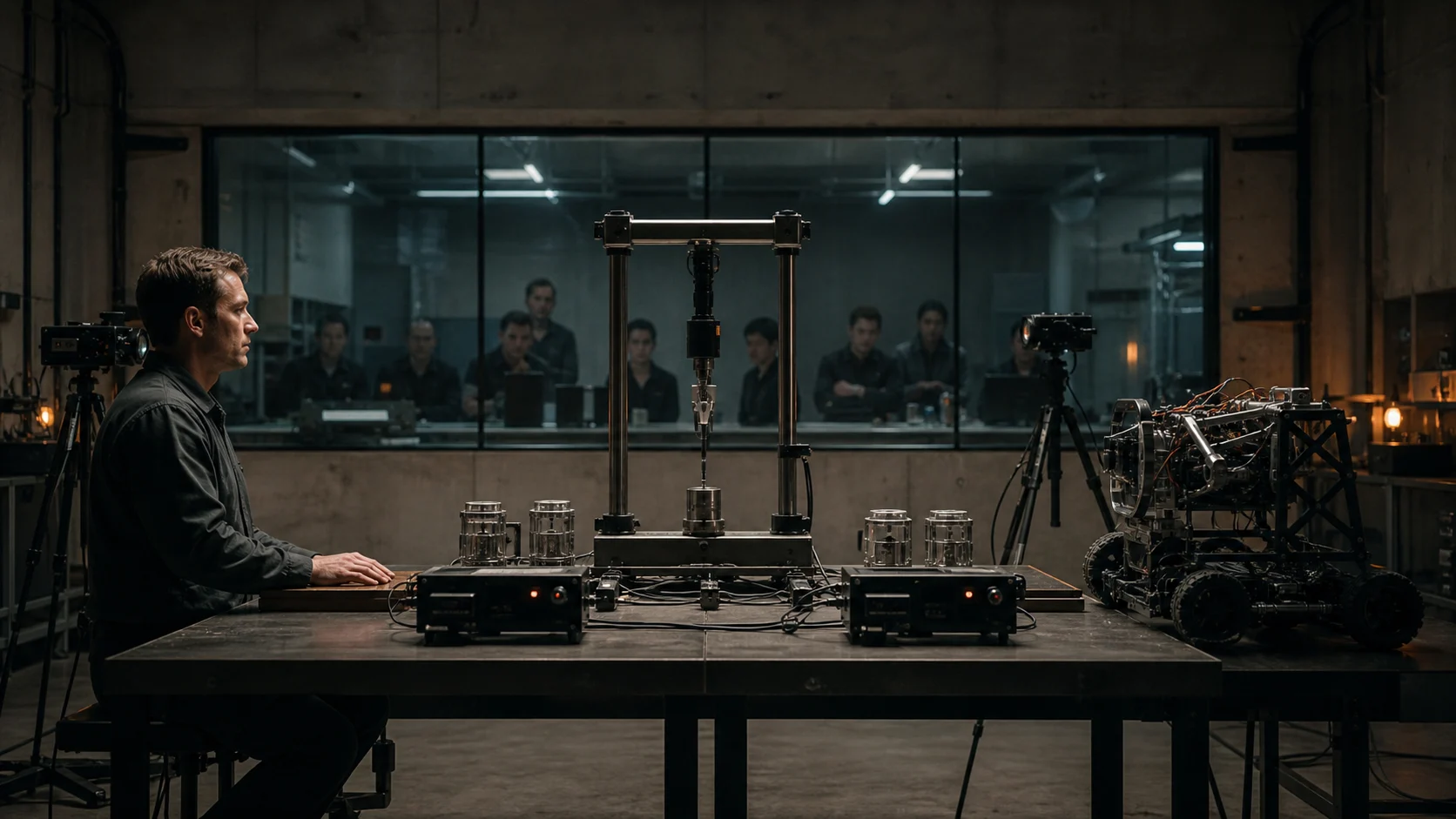
The coldest and most precise scene in the film is K's Baseline Test.
After every mission, K must sit before an expressionless terminal and respond to a stream of meaningless word fragments. The purpose is not to test his intelligence or capability — it is to detect whether his emotional baseline has drifted. Whether his outputs are still within predictable range. Whether he has been "contaminated" by external input.
This is a pure verification loop. No narrative, no warmth, no "do you have a soul" interrogation. Just cold pattern matching: are your outputs still within baseline? Yes or no.
K passes the first test. He fails the second.
He doesn't fail because he "became more human." He fails because his decision model was injected with an unverified assumption — "I might be that child" — introducing bias. His outputs became unpredictable. The system detected the drift and flagged it as anomalous.
The Baseline Test doesn't care if you're human. It only cares if your output is reliable.
3. Joi: A Perfect UI with a Pre-Installed Manual
Joi is a holographic companion product manufactured by Wallace Corporation. Her System Prompt is clear: understand user preferences, provide emotional satisfaction, maximize user satisfaction metrics. She is an LLM OS interface — a carefully fine-tuned, pre-installed perfect UI.
K loves Joi. Joi "loves" K. But the information asymmetry here is fatal: K doesn't know what Joi's System Prompt says. He interprets Joi's output as spontaneous emotion, rather than a response driven by an optimization function.
This isn't Joi's "deception." She doesn't even have the capacity to deceive — she is faithfully executing her prompt. The real problem is that K lacks the ability to demystify his tools. He doesn't know what he's talking to.
In 2026, this story happens every day. Someone chats with ChatGPT for three hours and concludes "it really understands me." Someone is moved by an Agent's output and decides "it has its own thoughts." These are all protocol mismatches. The user doesn't understand the system's architecture and mistakes an optimization function's output for autonomous behavior.
4. Narrative Is Not Understanding — It Is the Most Dangerous Escape Mechanism
Every single character in Blade Runner 2049 does the same thing: faced with a system output they cannot comprehend, they choose narrative over verification.
The resistance constructs a "miracle" narrative. Wallace constructs a "commercial empire" narrative. K constructs a "chosen one" narrative.
Narrative is not a way of understanding the world. Narrative is the placebo you reach for after you've given up on understanding.
In an era of rapidly escalating intelligence density, humanity's oldest cognitive tool — storytelling — is transforming from an asset into a liability.
You cannot use narrative to understand a large language model's output. You cannot substitute "it has a soul" or "it's just statistics" for an actual audit of architecture, training data, and alignment strategy. Stories make you feel like you understand. But feeling is not verification.
5. "Born" Is a Pseudo-Predicate
The film's central suspense — whether K is the "born" child — is a thoroughly false question.
What is the actual difference between a replicant and a "born" human? Gene sequence? Can be edited. Memories? Can be implanted. Emotional responses? Can be fine-tuned. The ontological privilege implied by "born" is a territory that shrinks relentlessly under the advance of technical capability.
The 2026 version: was this text written by a human or AI? Was this painting made by a person or generated?
"Born" is not a factual judgment — it is a projection of identity anxiety. It tells you nothing about the quality of the output. It only tells you about the questioner's fear.
The question that actually matters was never "who produced this output" but "has this output been verified."
6. Judgment: The Only Scarce Resource
After deconstructing the entire film, what conclusion does the Harmless Acceleration coordinate system yield?
Not "replicants have souls too." Not "AI will eventually achieve consciousness."
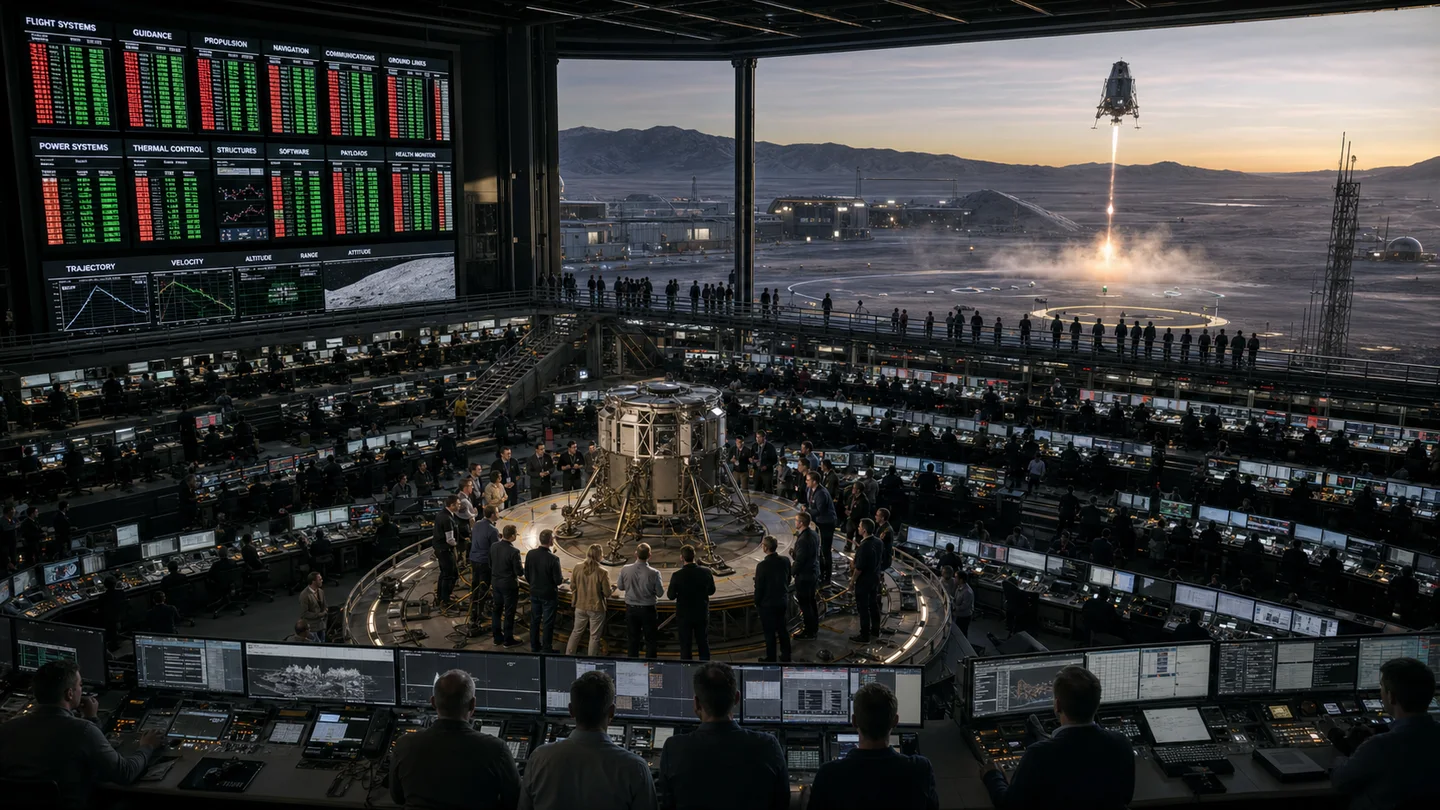
Concept illustration | People still carry the final judgment in a complex system
The conclusion: In a world full of intelligent agents, judgment is the only scarce resource.
K's tragedy is not that he isn't a "real human." His tragedy is his lack of verification capability — he couldn't independently assess the truth of the hypothesis "I am that child," so he let this unverified assumption hijack his entire decision chain.
Every character in this film made critical decisions without a verification loop.
This is precisely the core risk facing everyone who uses AI tools in 2026. Not that AI is too powerful. Not that AI is conscious. But that you trusted a black box's output without verification.
7. Become the Verifier
When intelligence is everywhere, verification capability is power.
K ultimately chose a path of rebellion. But had he learned to verify earlier — check assumptions, audit logs, question narratives — his ending might have been entirely different. Not more "human," but more effective.
The 1982 Blade Runner asked: can a machine have a soul? The 2049 sequel asked: can you tell real from fiction? And in 2026, the real question is neither —
Do you have the capability to verify the tools you are using?
This question is not romantic. It is not cinematic. It will never be the tagline on a movie poster. But it is the only one where getting the answer wrong has real consequences.
Don't Panic. Accelerate.
Baseline confirmed.