The dawn of IT housekeeping
As AI lowers the cost of building internal tools, small businesses no longer have to buy ill-fitting SaaS. IT housekeeping will become a new entry point for ordinary people.

Two weeks ago, an entrepreneur I know cut all her company's software subscriptions.
Not because she was broke. Because she had suddenly worked out the numbers.
She listed the bills: customer management software, 1,200 yuan; project collaboration, 600 yuan; an HR system, 900 yuan; document management, 400 yuan; data reporting, 1,500 yuan; compliance archiving, 800 yuan. Add an IT contractor billing by the hour, at roughly 18,000 yuan a month.
Monthly total: just over 23,400 yuan. Annualized, close to 280,000 yuan.
Then she asked a question: how many of these tools had actually been tailored to her business?
Zero.
Every one was “good enough, but a poor fit.” Her workflow required manually syncing data across three tools, eating up two afternoons a week. The IT contractor understood the tools, not her business, and had not set up even one automation.
Last month, she spent one month's IT budget to hire a technically minded friend, who rebuilt the setup with an AI toolchain. She got those two afternoons back. Three tools became one, with annual maintenance costing less than a third of what she used to pay.
How the numbers work
The logic of SaaS used to be straightforward: you cannot afford enough engineers to build it yourself, so you buy. Salesforce has had two thousand engineers iterating for twenty years. How can your company of a few dozen people compete? Just buy it.
That logic was right in 2015. Its premise was that developing custom software cost far more than purchasing it.
Over the past year, that premise has begun to collapse at a speed we have not fully taken in.
AI is pushing the marginal cost of “turning business requirements into working software” toward zero. Not all the way to zero: complex systems still need professional judgment on architecture and security. But the barrier has fallen to a critical point. Someone who understands the business and knows how to use AI tools can now deliver an internal tool in days that once would have taken three months to develop.
This is not an improvement in capability. It is a phase transition.
Water at 99°C and 100°C is in two different states. SaaS moats, whether feature completeness or technical barriers, have very different value on either side of that critical point.
A new species
You may already have met someone like this in certain circles:
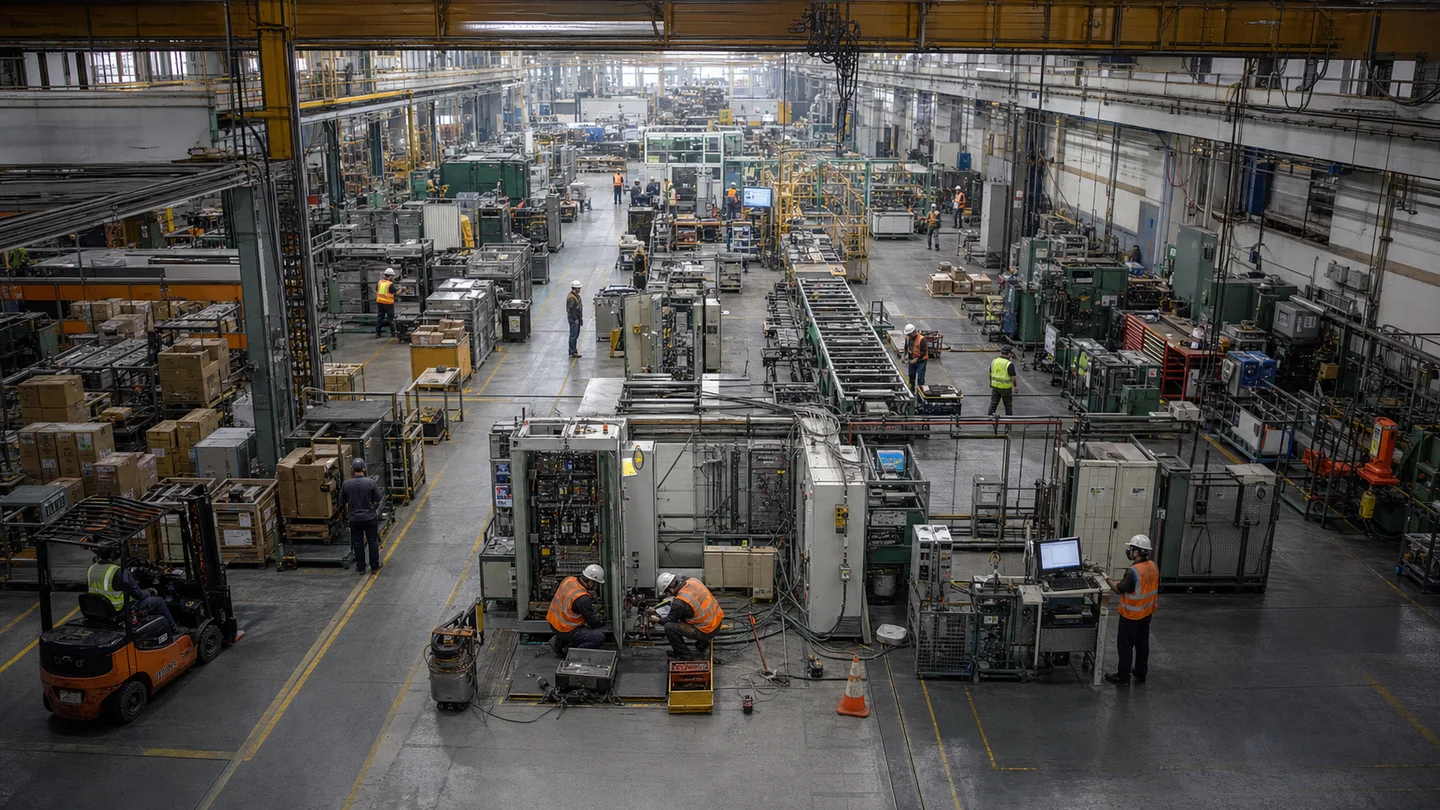
Concept illustration | A new IT housekeeper must understand the business before configuring software
He understands technology, but he is neither a full-time CTO nor an outsourcing firm. He serves two or three businesses at once, understands each one's operations in depth, and uses an AI toolchain to build, maintain, and iterate their systems. Two clients, each paying 15,000 yuan a month. No team. No office. What he needs is an understanding of the business and judgment about the limits of AI tools.
For now, I call it “IT housekeeping.”
The service works much like housekeeping: you are hiring someone to look after something, rather than buying a product. He knows your circumstances and what methods to use. Most of the time he is out of sight, but when a problem comes up, he responds quickly.
Over the past twenty years, this role was called the “family doctor.” Once hospitals were everywhere, the family doctor disappeared. Once SaaS began selling standardized functions, the dedicated “IT caretaker” had nowhere left to stand.
AI's ability to customize is beginning to overtake SaaS's advantage in standardization. That vanished role may return in a new form.
Not everyone wins
To be clear: “IT housekeeping” asks far more of a person than traditional IT operations.
He needs to understand both business logic and the limits of AI tools, decide what to build and what to buy, and encode the client's tacit knowledge into systems. That judgment is truly scarce. It is also why this role's ceiling is more than an order of magnitude higher than a traditional IT engineer's.
The squeeze falls on the layer in between: people who know a little technology but lack deep business understanding, who can use tools but cannot orchestrate an AI toolchain. This is structural replacement, rather than gradual evolution. And it will move faster than most people expect: AI toolchains improve exponentially, and once businesses change their purchasing decisions, they often do so in batches.
I am not saying this to be pessimistic. This is simply the terrain.
What she had not expected
After switching to an “IT caretaker,” that entrepreneur described something she had not anticipated:
For the first time, she had technical support that really understood her workflows. Not a contractor taking tickets, or IT staff who only managed accounts, but someone who would ask “为什么你们每周要手动导这份数据”, then eliminate the process altogether.
That feeling, she said, was worth more than any subscription tool.
The SaaS era's worldview was: features are value, subscriptions are capability. That worldview was not wrong; it belonged to the previous cost structure. When the cost structure changes, the worldview expires with it.
The new map is still being drawn. Most people are still navigating with the old one.
Don't Panic. Accelerate.